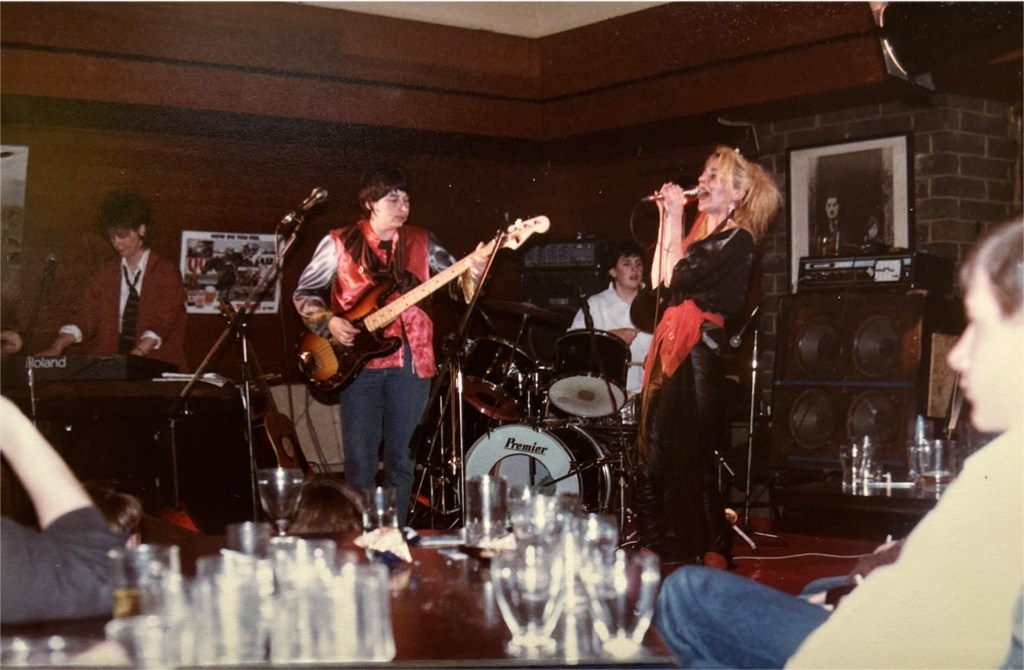
Q&A session with Salvation Jane founding members Cascade Leggett and Maureen Cummuskey: 40 years later.
Salvation Jane were a collection of gifted musicians who had the creative nous to be able to present the burning political issues of the early 1980s: especially feminism and its link with other broad progressive perspectives like sexual identity and workplace politics. They were very courageous in choosing material that challenged established institutions and often adapting it to local conditions.
– Jeffrey Dalton, Salvation Jane fan
Q: In 1980 you were the first women’s rock band to join the Canberra pub scene. What can you tell us about the Canberra live music scene of the 1970’s – 1980’s?
A: Canberra was buzzing with live music opportunities by the 1980’s. Pubs and clubs provided the venues for a thriving local music scene. There were opportunities to perform live music many nights of the week.
As musicians it was a great time to mix and mingle and create bands. For audiences live music of all genres could be found in some pub or club. However, there were no women’s rock bands.
Q: How did you get to play regular gigs in these male dominated venues?
A: In 1980 our first few gigs were in a variety of live music venues. We loved the feel of the pub and club circuit best. We wanted to manage our own gigs so we fronted up to a few pubs and asked the managers to let us perform at their venues. Just like any local band at that time would do.
Q: How did that go?
A: Initially a great big ‘NO’. There was ridicule and sexist comments questioning our ability to set up our own equipment or run a sound system. There was disbelief that we could draw a crowd and comments like we would ‘turn away’ their male clientele.
Q: Did you expect that to happen?
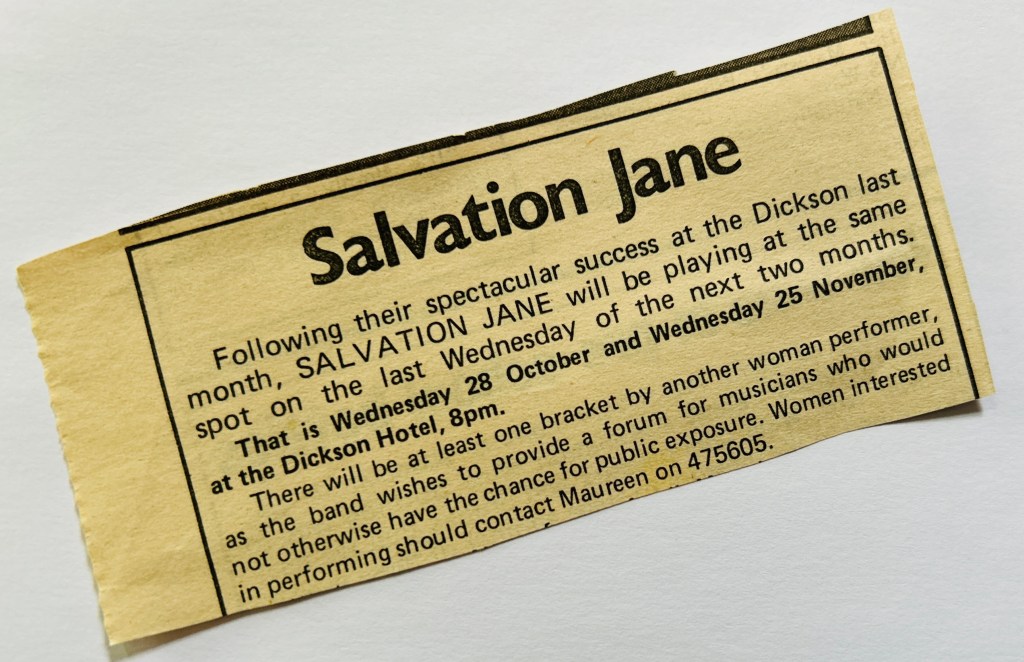
A: These attitudes didn’t surprise us. We were activists for women’s rights, we were determined and we were up for the challenge. We persisted in pestering the pubs. In 1981 the Dickson Hotel gave us a chance. They didn’t question our abilities, they just said: ‘OK. We’ll give you a chance.’
Q: What did that offer mean?
A: The offer was: one night only (on a night of the week they usually had very few pub-goers). No payment. Set up and pack down plus sound equipment ours to supply. Leave the stage areas tidy afterwards. We took it.
Q: What do you remember about that gig?
A: The venue was full to capacity.
It may have been a slow night for the pub but there were a fair few pub regulars there when we set up. Some of these regulars decided to vacate the premises. But others stayed and continued to support our future gigs.
The rest of the crowd were our friends and a mix of people we didn’t know.
Many women helped us set up and pack down afterwards. They lugged large pieces of hired sound equipment to and from the venue and helped us ‘leave the stage area tidy.’
The bar manager was ‘very pleased’ with the bar takings, and shortly afterwards the owners asked us if we wanted to come back another night.
A few days later we said: ‘Yes. As long as we get paid.’
Q: And the audience?
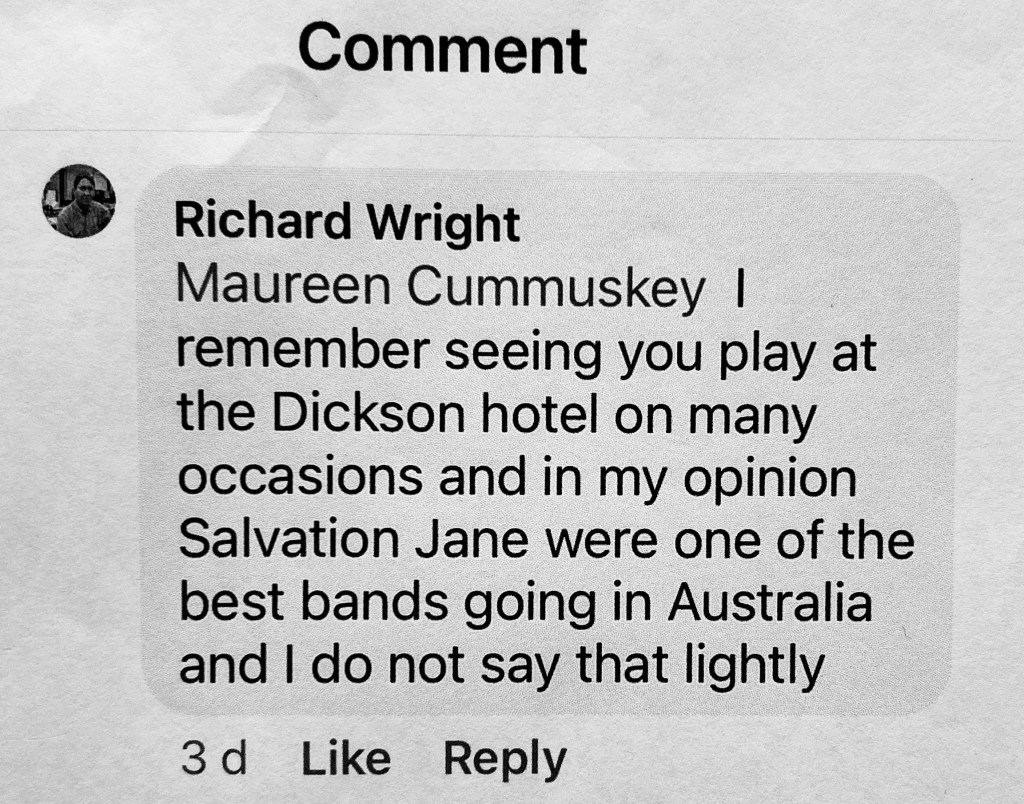
A: The audience feedback was epic. Many women told us they wanted to listen to more of our music. That they wanted to keep hearing rocking music that respected and celebrated women. Their support was phenomenal throughout the band’s career.
Q: Was the Dickson the only pub you played?
A: No. The Dickson was the venue we managed ourselves. Some other pub gigs we remember were at the Civic Hotel, The Wello, the ANU Bar and the ANU Refectory. These bookings and promotions were organised by the iconic Canberra Community Radio Station 2XX. They were at the forefront of supporting local, alternative and Australian music ahead of the mainstream media.
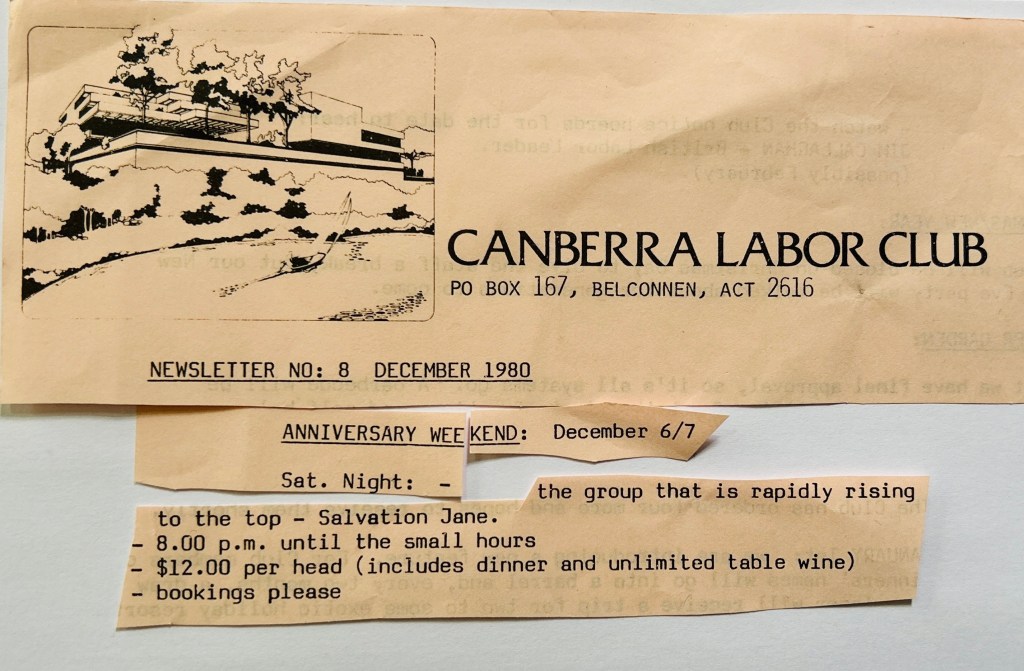
Q: You also did gigs at Canberra clubs in the 1980’s. Was there a difference between the pubs and the clubs gigs?
A: Clubs were, and still are, membership organisations. Pubs are open to the public.
Clubs invited us to perform as a guest band. So we didn’t manage those gigs.
A lot of our club gigs were like our pub nights with everyone up and dancing but we also had club bookings for concerts where the audience was seated. We were provided with drinks and meals in the clubs.
Club premises had areas that were set up for live music. They organised decent sound systems and lighting rigs which meant we didn’t have to hire all the sound and stage equipment. This meant we had the luxury of doing a thorough sound check before the doors opened which never happened in pub venues.
Q: Any final comments about the 1980’s Canberra bands pubs and clubs circuit?
A: We had a rollicking rockin’ good time doing those pub and club gigs.
One of our first gigs was at the ACT Leagues Club. There was a large crowd of men celebrating a big football win that day. They greeted us with howls of laughter and bad sexist jokes. A vivid memory was what happened as our first set progressed. We watched this bunch of men start to shut up and listen to the band. By the second set they were up and dancing and offering us drinks.
40 years later, some of those pubs and clubs no longer exist.
Two clubs we remember fondly were the Canberra Workers Club and the Canberra Labor Club. The Canberra Workers Club venue has gone now.
And those pub memories. The Civic Hotel has gone. It’s place in feminist history includes a group of us protesting in the main bar sometime in the 1970’s because Australian pubs discriminated against women and banned them from the main bar. Women were only permitted to be in a separate ‘lounge’ bar.
We are pretty sure that the space Salvation Jane performed in a few years later would have been the old lounge bar, now liberated with women taking up a lot of extra space in the main bar as well.
The Dickson Hotel has gone. It deserves its place in history for being the first Canberra pub to regularly host a local women’s rock band.
Were you at any Salvation Jane gigs in the 1980’s?
If you were at one of our gigs, or have stories to share, please let us know in the comments.


Leave a Reply